
When we think of glowing organisms, our minds often wander to fireflies or deep-sea creatures. But did you know that some fungi also emit their own natural light? Bioluminescent fungi create a glow that has intrigued scientists, mycologists, and nature enthusiasts for centuries.
In my previous blog entries, I briefly touched on the bioluminescence in some fungi such as Jack O’lantern. Now, let’s dive much deeper into how and why bioluminescence actually occurs in fungi!
What is bioluminescence and how do fungi develop it?
Bioluminescence is the emission of light by a living organism, resulting from a biochemical reaction. In fungi, this reaction depends on two critical substances: luciferin and luciferase.
Luciferin is a light-emitting molecule that functions as a ‘fuel’ for the reaction. In fungi, the specific luciferin is derived from a compound called 3-hydroxyhispidin, which is unique to bioluminescent fungi. Luciferase is an enzyme that acts as a catalyst, speeding up the biochemical reaction without being consumed.
When luciferin reacts with the oxygen in the presence of luciferase, it forms an unstable intermediate compound. As this compound breaks down, it releases energy in the form of light. The light produced by bioluminescent fungi typically has a greenish color, with a wavelength of around 520–530 nanometers. This color is determined by the structure of luciferin and environmental factors like pH levels. In fungi, the bioluminescent reaction primarily takes place in the cytoplasm of cells, with the glow often concentrated in the mycelium or the fruiting body (such as the mushroom cap).
Watch this from Harvard Museum of Natural History!
Where can you find bioluminescent fungi?
Bioluminescent fungi are found across the world, typically in tropical and subtropical regions. They are primarily found within the genera Mycena, Armillaria, Neonothopanus, and Omphalotus. Over 100 species are known to emit light, with notable examples including:

- Mycena chlorophos: Found in Asia and the Pacific Islands, this species is known for its delicate, green-glowing caps.
- Panellus stipticus: This fungi species is commonly known as ‘bitter oyster’. Common in North America and Europe, it grows on decaying wood and glows with a greenish hue.
- Neonothopanus Gardneri: Neonothopanus gardneri is a bioluminescent fungus found in South America, mainly in Brazil, often referred to as “coconut flowe” due to its appearance. This fungus primarily grows on decomposing leaves and the trunks of certain palm trees, thriving in tropical and subtropical climates. More information can be found in this article.


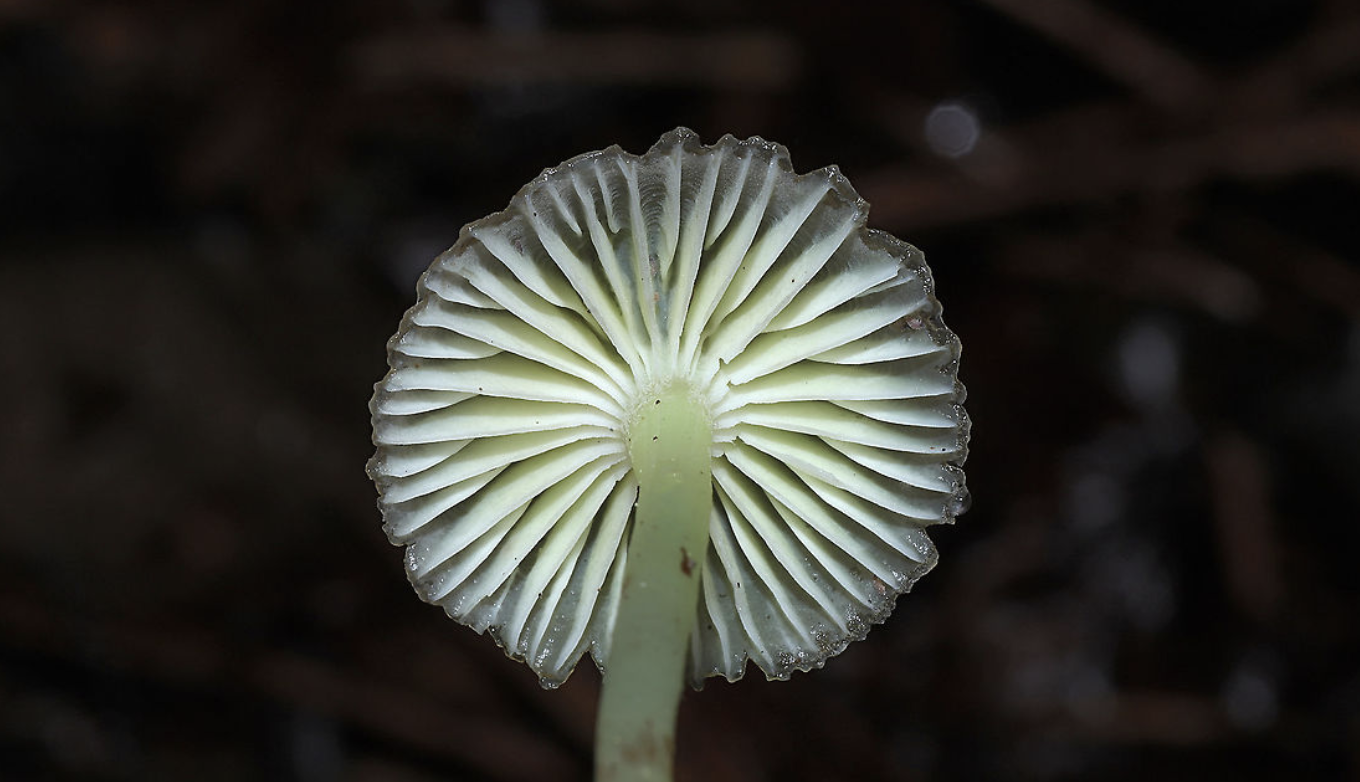
Panellus stipticus and Mycena epipterygia by Flown Kimmerling
The reason for fungi’s ability to produce light has been debated by scientists for a long time. One of the proposed theories is about survival. Many species glow brighter at night, possibly to attract insects and other organisms that help with spore dispersal. On the other hand, the light can also act as a warning to potential predators, much like bright coloration in some poisonous animals. Predators might associate the glow with harmful or inedible substances and stay away from the fungi.
Some researchers also speculate that bioluminescence in fungi may help reduce oxidative stress by neutralizing harmful reactive oxygen species (ROS) produced during metabolic processes such as breaking down organic matter. The light-emitting reaction consumes oxygen, which could lower the buildup of damaging free radicals in the cells, ultimately protecting the fungus from cellular damage.
What are the practical applications of bioluminescence of fungi?
These glowing organisms react to their surroundings by changing the intensity of their light, making them natural biosensors. For example, in polluted environments, harmful substances like heavy metals or toxins can interfere with their light-producing chemistry. Scientists can measure this change in glow intensity to quickly detect contamination in soil, water, or air without the need for complicated lab tests. A species used for this purpose is Gerrenema viridilucens.
This sensitivity is now being leveraged in medical diagnostics. Scientists have integrated luminescent genes from bioluminescent fungi into cells or model organisms, allowing them to monitor gene expression, protein interactions, and disease progression in real time. These glowing systems can help identify infections by highlighting areas of active pathogens or detecting biomarkers for conditions like cancer. Read this article to find more information about the applications of bioluminescent fungi.
A future application might be the use of bioluminescent fungi as a source of sustainable lightning. Inspired by how some tribes used glowing fungi to light forest paths, scientists are exploring fungal bioluminescence as an eco-friendly alternative to artificial light.
Do you know any other bioluminescent fungi or have you spotted one before?
 fungitopia.org
Such an interesting read! I’ve come across Jack O’lantern mushrooms a few times, but never at night, so I had no idea they were luminescent until I read your post. Now, I’m tempted to plan a trip to the tropics just to go looking for glowing fungi.
LikeLiked by 1 person