Lichens
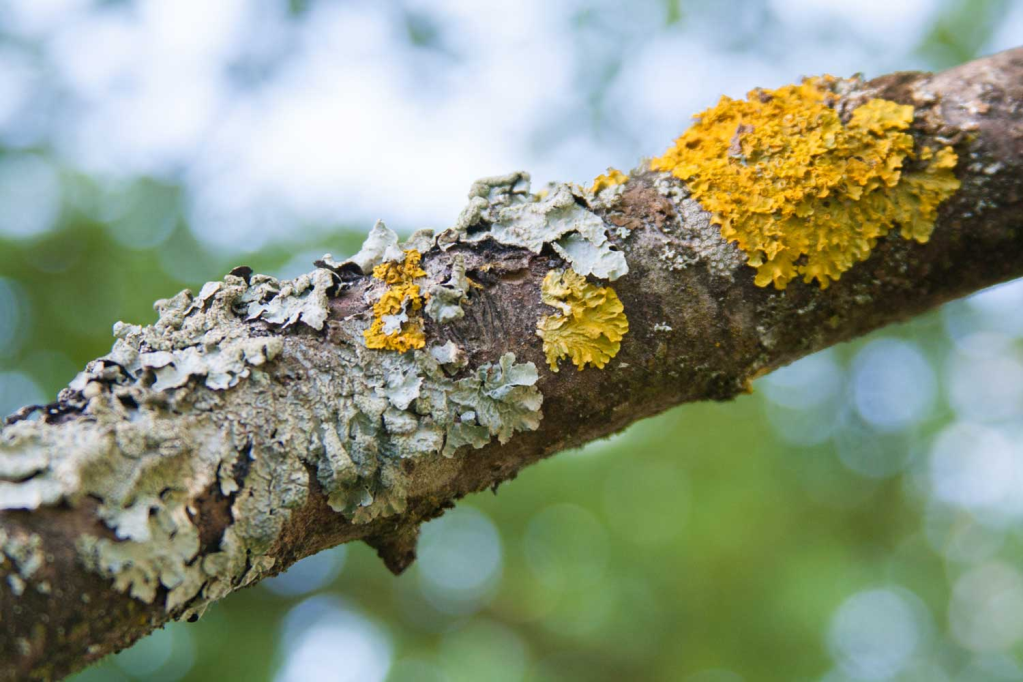
If you’ve ever encountered pale green crusts clinging to rocks, bright orange patches splashed across the rooftops or wispy strands hanging from tree branches, you’ve already crossed paths with a distinctive subset of the fungi kingdom: lichens. For generations, lichens were introduced in textbooks as simple partnerships between a fungus and a photosynthetic partner such as algae or cyanobacteria. That explanation, turns out, barely scratches the surface.
At their core, lichens are symbiotic relationships. The fungus (mycobiont) forms the main body of the lichen, creating its shape and structure, while also protecting the photosynthetic cells from drying out and environmental stress. In return, the photosynthetic partner produces sugars through photosynthesis, which feed both organisms. This close cooperation allows lichens to function as a single biological unit, even though they are made of two very different life forms.
Recent research has radically expanded our understanding of this intricate organism. When scientists examined lichens using modern DNA and gene-expression tools, they consistently found additional fungi, yeasts, and bacteria living inside the lichen body. The same group appeared repeatedly in the same lichen species, suggesting that they play an active role in keeping the lichen alive. Rather than being only a two-part association, lichens represent a small community of microorganisms cooperating together to form and support a biological system.
Lichens are well-known for their ability to survive in extreme environments, including intense cold, scorching heat, drought, and desiccation. They can shut down metabolically for months and maybe even years, then revive within minutes of rehydration. This remarkable resilience explains why lichens have a longer lifespan than any other member of the fungi kingdom.
Lichens are held together by far more than simple physical contact between partners. The fungal component produces a dense network of thread-like structures called hyphae that wrap around, surround, and partially penetrate the photosynthetic cells. The fungus also produces sticky and water-repellant proteins, along with complex sugars and cell-wall materials, that function like biological glue, binding cells together and sealing the lichen body. At the same time, the fungus carefully controls how far it grows into the algal cells through specialized contact structure, facilitating nutrient exchange without killing or damaging its partner.
Lichens are remarkably tolerant of toxic substances, including heavy metals, air pollutants, and reactive oxygen species, which helps explain their ability to colonize hostile environments. This tolerance stems from a combination of physical, chemical, and metabolic strategies. The fungal partner produces secondary metabolites that can neutralize toxic compounds. In addition, lichens possess strong antioxidant systems that protect cells from oxidative stress caused by pollutants or extreme environmental conditions.
When scientists sequence all the genetic material inside lichens, they do not only find DNA from fungi, algae, and bacteria. They also find viral genetic material. These viral genes are detected consistently enough that they are unlikely to be simple surface contamination from the environment. Most of these viruses are thought to infect the fungal partners or the photosynthetic partner, and many appear to exist without causing immediate damage or causing noticeable disease symptoms. However, detecting viral DNA or RNA doesn’t necessarily mean that this genetic material is actively causing disease. In many biological systems, viruses can live quietly inside hosts without killing them, sometimes even altering how their hosts function in subtle ways. In lichens, viruses are thought to influence their response to stress and their ability to adapt over evolutionary timescales.
Truffles
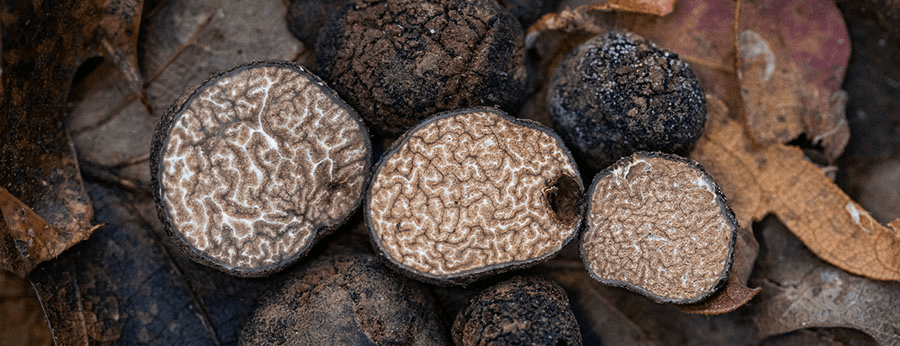
The image that comes to mind when we think of fruiting bodies of fungi is a classic mushroom: a cap and a stem pushing up through the forest floor. But, some fruiting bodies remain hidden from our eyes. Truffles are one of them. They are the underground fruiting bodies of certain fungi in the Ascomycete group, most famously those in the genus Tuber. Because they never emerge in the open air, truffles can’t rely on wind to spread their spores. So, they develop a very different solution. Truffles produce powerful aromas that attract animals like wild boar, rodents, and even trained dogs, who dig up and eat these truffles. In doing so, they inadvertently help disperse their spores and reproduce.
At the core of truffle biology is ectomycorrhizal symbiosis. Truffles form symbiotic associations with the roots of specific trees such as oaks, hazelnuts, beeches, and pines, facilitating nutrient and water exchange with their vast mycelium network. In fact, truffles completely depend on this symbiotic partnership to complete their life cycle. They’re not capable of living independently in soil the way many saprotrophic fungi are. But, this is not a general relationship they form with any tree. Each truffle species has a restricted range of compatible hosts.
Truffles are not only prized for their ecological role and exquisite flavor but also for the combination of compounds that they contain such as carbohydrates, unsaturated fats, minerals, vitamins, polysaccharides, phenolic compounds, sterols, and terpenoids. Many of these compounds function as antioxidants, meaning that they neutralize harmful reactive oxygen species that contribute to aging, inflammation, cancer, and other types of disorders. The truffle bioactivity relies heavily on species, origin, and how compounds are extracted and preserved.
Here is a great video that sums up truffles:
How has our understanding of truffles evolved throughout history?
Humans’ attempts to uncover the mysterious world of truffles date back to ancient times. A Greek philosopher Theophrastus wrote about truffles in Historia plantarum, trying to explain their physiology while still lacking a clear framework for fungal life cycles. Similarly, Roman authors such as Cicero poetically referred to truffles as “children of the earth,” and Pliny the Elder proposed that truffles were generated by thunderstorms and lightning striking the soil. During antiquity, most truffles consumed in the Mediterranean world were desert truffles, which significantly differ from European forest truffles in aroma and ecology. These desert truffles were widely eaten in North Africa, the Middle East, and parts of Asia. While knowledge of truffles declined in western Europe after the fall of the Roman empire, it continued to develop in the Islamic world, where truffles were not only valued for their culinary importance but also for their medicinal potential. The Prophet Muhammad recommended truffles for treating eye disorders, and the physician Avicenna described their use for wounds, weakness, and inflammation.
Following these discoveries, truffles reentered European elite culture during the late Middle Ages and Renaissance, especially in Italy and France. What had once been a peasant food gradually became a luxury item associated with wealth and refinement. By the fourteenth century, truffles were firmly established in the aristocratic cuisine, and by the nineteenth century, France entered what historians call the “golden age of truffles”. Meanwhile, botanists still debated what truffles actually were. Some speculated that they were plant deformities. This uncertainty persisted till the early eighteenth century, when scientists such as Claude-Joseph Geoffroy recognized truffles as fungi rather than plants, and Pier Antonio Micheli demonstrated that they produced spores enclosed in sacs, supporting the evidence that they belong to the Fungi kingdom.
Familiar?
There are many kinds of truffles out there, but two species have achieved wide public recognition: black truffles and white truffles. For most people, these species are an indispensable item on their plate. The culinary importance of these species comes from their unique secondary metabolite profiles, particularly volatile organic compounds. Black truffles offer a balanced mixture of sulfur-containing compounds, alcohols, ketones, and aldehydes that remain relatively stable under moderate heat. This chemical composition explains why black truffles can be cooked and infused into fats and sauces without complete loss of aroma. White truffles, on the other hand, generate extremely volatile sulfur compounds with very low odor thresholds. These molecules degrade rapidly when heated, which is why white truffles are consumed raw.
Puffballs
Puffballs are among the most visually distinctive fungi, and they’re pretty easy to identify due to their characteristic round shape and brown fruiting bodies that seem more like small balls than traditional mushrooms. Unlike gilled mushrooms or boletes, puffballs belong to a group of fungi that package spores internally and release them only when they’re mature. The interior tissue is called gleba (just like the sticky green slimes on the surface of octopus stinkhorns which I wrote about in my Halloween Fungi post). It starts out firm and white but then turns darker in color and transforms into a powdery mass of spores. Once fully developed, the outer wall of the puffball dries and ruptures or forms a small opening. Pressure from raindrops, falling debris, animal contact, or human footsteps forces clouds of spores into the air. This “puffing” mechanism is highly efficient, allowing millions to billions of spores to be dispersed with minimal energy investment.
Are puffballs edible?
Some puffballs are edible only when young and completely white inside. At that stage, their mild flavor makes them popular with foragers. However, puffballs can be easily confused with very young poisonous mushrooms (such as baby Amanitas) that haven’t yet developed caps and stems. For that reason, mushroom experts strongly advise never eating wild puffballs unless you are absolutely certain of what you’ve found.
Ecological Role of Puffballs
Puffballs are primarily saprotrophic fungi, meaning they decompose organic matter such as leaf litter, dead wood, and plant debris. Through this process, they contribute to nutrient cycling by breaking down complex organic compounds and returning carbon, nitrogen, and minerals to the soil.
More Info…
Historically, puffballs have been used in surprisingly practical ways. Dried puffballs were once applied to wounds to stop bleeding, and they even appeared in surgical settings. Artists and photographers have also used their spores as a natural pigment, while kids (and curious adults) have long enjoyed stomping on the mature ones just to watch the cloud of spores splash out!
 fungitopia.org