
Back when I wrote about Antarctic fungi, I mentioned fungi species living in those icy lakes. But the story of fungi and water doesn’t stop there. What if we zoom out of the Antarctic and explore the wider marine environments that fungi inhabit and utilize?
Oceans cover about 71% of the Earth’s surface and are home to over 80% of life on Earth, including coral reefs, fish, whales, and deep-sea ecosystems. Most people don’t associate fungi with the ocean, but you would be surprised to learn how crucial they are for underwater ecosystems. A number of fungi you can’t even imagine inhabits oceans.
A Short Story of Discovery
The idea of fungi living underwater might sound obvious today, but for a long time scientists didn’t believe it. In the early 19th century, people noticed odd fungal growths on driftwood and seaweed, but most assumed these were land fungi that had washed into the ocean. It wasn’t until the mid-20th century, particularly through the work of Barghoorn and Linder in 1944, that fungi were confirmed as true marine residents capable of reproducing in seawater.
By the 1970s and 1980s, with diving and ocean expeditions expanding, researchers uncovered fungi thriving in mangroves, salt marshes, and even deep-sea sediments. Then came the genomic revolution of the 2000s: DNA sequencing revealed that fungal life is everywhere in the oceans from Arctic ice to tropical coral reefs and that thousands of marine fungi remain unknown to science. The total number of marine fungi discovered so far is around 2,200 species.
Marine Fungi
Marine fungi can be broadly divided into two groups: obligate and facultative. Obligate marine fungi are fungal species that require a marine environment to complete their life cycle, including growth, reproduction, and spore dispersal. They are fully adapted to life in the ocean and cannot survive or reproduce in freshwater or terrestrial environments. These fungi are typically found on decaying submerged wood, algae, seagrass, sponges, and corals.
On the other hand, facultative marine fungi are fungal species that can live in marine environments but are not strictly confined to them. They typically originate in terrestrial habitats, but have the ability to adapt to or tolerate the conditions of the ocean. Because they are not restricted to marine-like conditions, they are easier to isolate and grow in the lab, which is the main reason they’ve become a major focus in marine natural product research. Both obligate and facultative fungi have adapted to high salinity, variable pressure, cold/hot temperatures, and oxygen-limited environments.
Why are they so important?
Decomposing organic matter: In the ocean, organic matter such as dead plants, algae, and animals falls to the seabed. Many marine fungi are tasked with breaking down this complex organic matter. The decomposition releases nutrients back into the environment, which supports marine food webs. Regarding this role, marine fungi basically do in the ocean what land fungi do on soil.
Some marine fungi that grow on submerged woods have a clever trick: they surround their hyphae with a slimy, gel-like coating. This coating traps the digestive enzymes the fungi release, preventing them from being swept away by ocean currents. By keeping the enzymes close to the wood’s surface, the fungi can steadily break down plant materials like cellulose and lignin, turning driftwood into a nutrient source they can actually absorb.
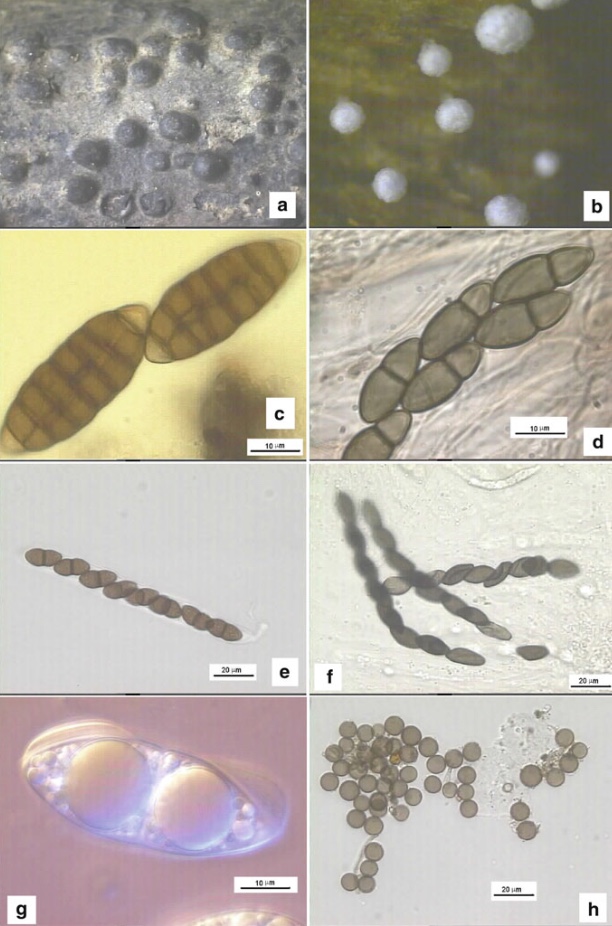
Some common lignicolous marine fungi of decomposing mangrove wood -> This image was taken from the book Fungi in Coastal and Oceanic Marine Ecosystems
Production of Bioactive Compounds: Fungi that inhabit highly competitive environments often produce a wide range of secondary metabolites as part of their survival strategy. Unlike primary metabolites, which are necessary for basic cellular functions like growth and reproduction, secondary metabolites are not essential for day-to-day survival. Instead, they provide fungi with a competitive advantage in challenging ecosystems.
In marine environments, fungi must contend with intense microbial competition, limited nutrients, and predation. To cope with these pressures, they produce secondary metabolites that can inhibit or kill competing bacteria, deter predators, or help them withstand environmental stressors such as UV radiation or salinity. These bioactive compounds include antibiotics, antioxidants, and enzyme inhibitors, and have attracted growing interest from researchers due to their pharmaceutical and cosmeceutical potential.
One such secondary metabolite is melanin. Derived from fungi like Amorphotheca resinae, it absorbs a broad spectrum of UV radiation. Additionally, its potent antioxidant activity helps protect skin from oxidative stress and premature aging. Certain marine fungi also create antibacterial compounds that can fight acne-causing bacteria, such as Propionibacterium acnes and Staphylococcus epidermidis. Together, these abilities make fungi a promising ingredient for future skincare and cosmetic products.
Another important role of fungal secondary metabolites is their potential as antifouling agents. Biofouling is the unwanted accumulation of organisms (bacteria, algae, barnacles, mussels) on submerged surfaces such as ship hulls, pipelines, and fishing nets etc. This build-up drags on ships (burning more fuel), damages infrastructure, spreads invasive species, and costs the marine industry million dollars every year. Antifouling strategies aim to prevent or reduce this. Historically, antifouling paints contained toxic compounds like copper or tributyltin (TBT), but these are harmful to marine ecosystems. Today, researchers are looking for new eco-friendly, natural antifouling agents, and marine fungi are now being investigated as promising candidates. Their bioactive compounds can inhibit the growth of the very organisms (bacteria, algae, and invertebrate larvae) responsible for biofouling.
Symbiotic Relationships: Fungi in oceans are not just looking out for themselves. Their bioactive compounds contribute to symbiotic relationships with marine organisms. For example, one study has found that a sponge-associated fungus Aspergillus niger produced metabolites with antibacterial and antifungal activity, giving the sponge extra protection against infections. Similarly, some coral-associated fungi release antioxidants and antimicrobial compounds, which help corals cope with heat stress and fend off pathogens.
Bioremediation: Researchers at the University of Hawai‘i at Mānoa recently discovered that marine fungi species isolated from nearshore environments have the ability to degrade plastic and some can be trained to do it faster. While fungi were already known as effective plastic degraders, most previous studies had focused on terrestrial species. What sets this new study apart is its focus on a large collection of marine fungi to see whether they share, or perhaps even surpass, the degradation abilities of terrestrial fungi. The researchers didn’t just test their natural capacity for degradation, but also conditioned the fastest-growing fungi by repeatedly exposing them to polyurethane ( a common type of plastic). Within three months, some strains adapted to degrade plastic 15% faster. The team is now shifting its attention to tougher plastics like polyethylene and PET. They are also beginning to study the enzymatic and molecular mechanisms behind degradation, which could one day fuel real-world solutions to the global plastic crisis.
More about marine fungi? This article is a great online resource for learning about different marine fungal species.
The North American Mycological Association recently uploaded a webinar on aquatic mushrooms, packed with interesting details. Make sure to check it out through this link!
 fungitopia.org
A nice read, appreciate you curating this Ida!
LikeLiked by 1 person
I’m glad you enjoyed learning about marine fungi, Christine! Let me know if you have any suggestions as to what I can write about in my next post
LikeLike