As I continue my journey in the world of fungi identification, one mushroom that I’ve encountered (and learned from) is the Jack O’ Lantern (which I confused with CoW before). This vibrant mushroom is a sight to behold in the wild (or suburban), but it comes with a warning, it’s toxic. Here’s what I’ve learned about its distinct features, where it grows, and why it’s essential to recognize it if you’re into foraging or mushroom spotting.
Where You’ll Find the Jack O’ Lantern
The Jack O’ Lantern is commonly found growing at the base of hardwood trees like oaks, and sometimes on decaying stumps. Jack O’ Lanterns thrive on wood, which makes them a frequent find near dead or decaying trees. They’re typically seen in clusters, often popping up in the late summer and fall.
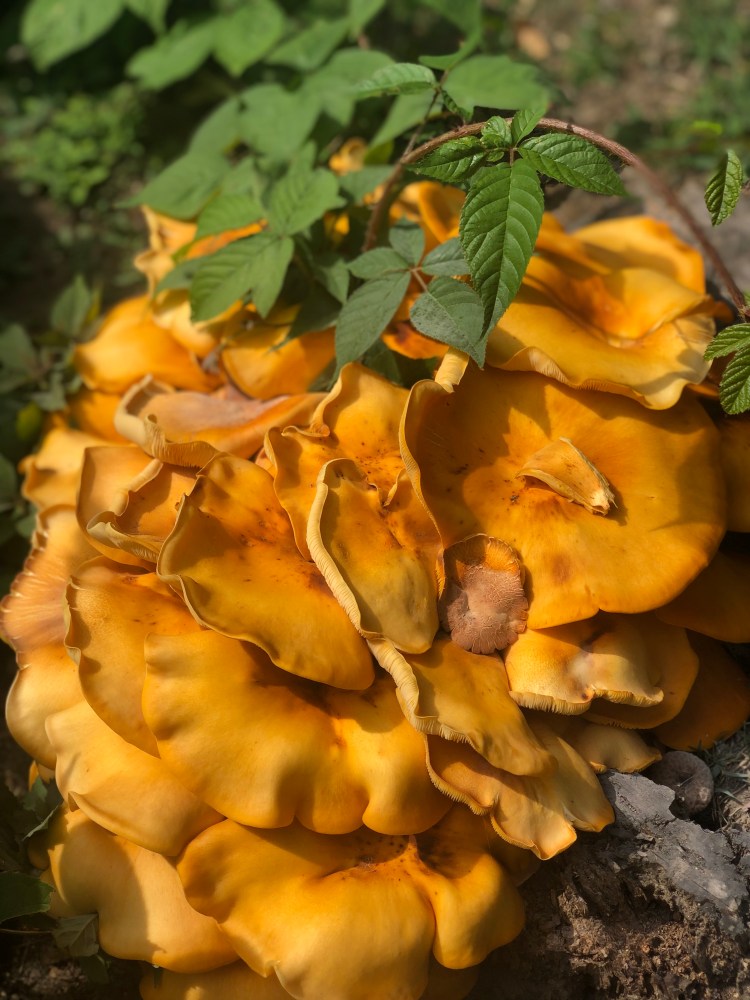
Distinct Features: The Glow and the Warning
In daylight, the Jack O’ Lantern stands out with its bright orange to yellow-orange color, often leading beginners to mistake it for similarly colored mushrooms like Chicken of the Woods, as I did at first. However, there are some key differences to look for:
- Jack O’ Lanterns grow on wood, typically in clusters.
- Jack O’ Lantern mushrooms have distinct gills under the cap.
- The caps of Jack O’ Lanterns tend to be round.
Despite their beauty, Jack O’ Lanterns are toxic to humans. While they are beautiful to observe and photograph, always keep in mind that not every eye-catching mushroom is safe.

Have you ever seen a glowing Jack O’ Lantern in the wild? What tips do you have for identifying toxic mushrooms on your hikes? Share your thoughts and experiences!
**All photos featured in this blog are taken by me during my hikes and are original to Fungitopia.org, unless otherwise stated.
#FungiFind #JackOLanternMushroom #MushroomHunting #MycologyJourney #NatureDiscovery #ToxicMushrooms #ForagingWisely #HikingWithFungi #Fungitopia #Mycology #WorldofFungi
 fungitopia.org
One thought on “Admiring from Afar: A Closer Look at the Jack O’ Lantern”